30 de noviembre · Estrategia + negocio
Executive Summit
Nueve charlas aceptadas, conversaciones sobre riesgo de IA y estrategia de plataformas, mesas ejecutivas y conexiones B2B voluntarias.
Explorar agenda del Summit🇦🇪 X-Ops 2026
Una ciudad. Dos experiencias. Un mismo ecosistema tecnológico.
30 de noviembre · Estrategia + negocio
Nueve charlas aceptadas, conversaciones sobre riesgo de IA y estrategia de plataformas, mesas ejecutivas y conexiones B2B voluntarias.
Explorar agenda del Summit1 de diciembre · Ingeniería + comunidad
Diez charlas aceptadas, con descripciones originales, fotografías y contenido técnico de nube, IA, seguridad y datos.
Explorar agenda de la ConferenceEl programa de Dubai
Summit y Conference comparten ciudad y visión, pero conservan su propósito, audiencia y ritmo.
Summit
Una jornada ejecutiva para CTOs, CISOs y Decision Makers que buscan conversación estratégica y networking de alto nivel.
Conference
Charlas y encuentros sobre DevOps, DevSecOps, AIOps, MLOps y Platform Engineering para quienes construyen tecnología.
Evento ejecutivo
Programa diseñado para líderes tecnológicos que buscan conectar decisiones de negocio, transformación y futuro.
Contenido para C-levels y directivos, orientado a impacto de negocio y decisiones aplicables.
Conversaciones de alto nivel en un formato de aforo limitado que favorece conexiones relevantes.
Casos de adopción DevOps, SecOps y Platform Engineering con métricas y aprendizajes accionables.
Certificado de asistencia emitido por X-Ops Conference.
Una experiencia cuidada para líderes tecnológicos y responsables de transformación.
30 Nov
Nueve charlas aceptadas, conversaciones expertas y conexiones B2B dirigidas. Panelistas y participantes de las mesas se anunciarán por separado.
Las charlas aceptadas para Dubai Summit aparecen con sus ponentes y duraciones originales. Los horarios pueden cambiar. Panelistas y facilitadores de mesas se anunciarán por separado cuando acepten esos roles adicionales. Todos los horarios en GST (UTC+4).
Registro y presentaciones voluntarias.
Presentación del programa; panelistas y facilitadores se anunciarán por separado.

At Tabby, product managers contribute to production code and write database migrations with coding agents. Daria follows one change from idea to merged pull request, mistakes included, and shows where the line sits between what a PM ships and what stays with engineering. For ops teams this raises two practical questions: how to review changes from people who do not read code fluently, and how to keep database migrations safe. The talk answers both from day-to-day practice.

Platform teams are product teams that never got a product marketer. They have users (internal developers), a competitor (every team building it themselves, or going straight to AWS), a buyer (the CFO or CTO) and a renewal - the annual budget cycle. They run all of that on zero positioning, zero segmentation, and zero proof. So at budget time they walk in with a list of things they did, and a vendor walks into the same meeting with a story about what a business gets. The vendor wins. Not because the platform is worse, but because it was never positioned. My talk teaches four GTM frameworks, each translated into a platform-team artifact they can build on Monday.

An expansion and update to a Bsides keynote talk in 2023 (https://www.superuser.space/latest-news-blog/bsides-berlin-2023-keynote), we take a look at the current challenges in 2026 in the information security "galaxy" and defending it to be ready for 2027. In this talk, she uses her experience this year alone on what it is like being a part of a major digital transformation project in the telecommunications industry working within GRC, learning more on AI from the LLM engineer perspective (to go beyond the AI slop), and what it is like implementing ISO 27001:2022 at startups that have recently started introducing AI.
La participación en el panel y la moderación están pendientes; los nombres se anunciarán tras su aceptación.
Panelistas y moderación por confirmar
La observancia respetuosa de las 11:30 seguirá el protocolo del recinto.
Starting September 2026, the EU Cyber Resilience Act requires software manufacturers to detect and report actively exploited vulnerabilities within 24 hours. This session walks through a working automation setup built on Elastic and Ansible: every build generates a live SBOM, streamed into Elasticsearch and enriched against CISA's KEV catalog and EPSS scores, visualized in Kibana. When a detection rule fires, the system checks context and either triggers a scoped Ansible playbook or routes to an engineer. Every action is logged, thereby producing a compliance report draft automatically. Attendees will leave with: 1. A reference architecture diagram and source code on GitHub 2. Ansible roles for SBOM generation, KEV/EPSS enrichment, and remediation 3. A working example turning logs into a compliance report draft 4. An honest look at where automation is safe, and where judgment matters
Facilitadores y participantes se anunciarán por separado. Son mesas de trabajo, no participaciones de ponentes ya aceptadas.
Facilitador(es) de mesa por confirmar
Almuerzo sujeto a confirmación de sede y catering.


Every managed Kubernetes offering solves the same problem the same way: you hand the control plane to someone else. That is convenient — until data-residency rules, an audit, or an exit clause force the uncomfortable question: could we run this ourselves, in-region, on our own hardware, tomorrow? This talk shows how we answered "yes" with KubeAid, an open-source application platform for Kubernetes, and its single-binary orchestrator, kubeaid-cli. The CLI starts a throwaway K3D management cluster on your laptop, installs Cluster API, provisions the target on AWS, Azure, Hetzner or plain bare metal, then pivots every Cluster API object onto the new cluster with clusterctl move so it manages itself — and the laptop cluster is discarded. From that moment everything is GitOps: one general.yaml is rendered into a config repository you own, and Argo CD reconciles the complete KubeAid platform — Cilium, cert-manager, kube-prometheus, Rook-Ceph, Velero, Sealed Secrets, and the rest of the stack your applications need — on top of upstream defaults you override only where you genuinely differ. We will set up a cluster live, from an empty directory to a self-managing Kubernetes cluster with the KubeAid platform reconciled by Argo CD. Then we will cover what most talks skip: day two. We will walk through how the same binary reports backup status across the cluster — Velero for workloads and volumes, CloudNativePG for databases — how recovery works when a cluster has to be rebuilt from nothing but its Git repository and its backups, and how the cluster is compliance-ready from day one rather than hardened afterwards: admission policies enforced by Kyverno, continuous vulnerability scanning with Trivy Operator, runtime security with Tetragon, secrets encrypted in Git with Sealed Secrets, access centralised through SSO, and every platform change landing as a reviewable commit — defaults that map to ISO 27001:2022 and cover GDPR and NIS2 goals out of the box. You will leave with a reproducible recipe for an application platform whose entire definition lives in a repository you control — backed up, recoverable, compliant, auditable, portable across providers, and not tied to any single vendor, including the one that wrote it. Takeaways: - How Cluster API's management-cluster pivot removes the "who manages the manager" problem - A GitOps layout where one YAML drives provisioning, the application platform and its backup policy, and drift is impossible by design - How backup health and recovery are built into the platform, and what that means for your exit strategy - What "compliance-ready from day one" looks like in practice: policies, scanning, runtime security and access control as platform defaults, mapped to ISO 27001, GDPR and NIS2
As organizations scale from dozens to hundreds or thousands of services, the operational overhead of onboarding each new service, configuring CI/CD pipelines, wiring up observability, enforcing security scanning, and satisfying compliance baselines grows from a minor inconvenience into a systemic bottleneck. This session examines internal developer platforms as the industry's primary response to that challenge, a discipline that increasingly sits at the intersection of DevOps, SecOps, DataOps, MLOps, and AIOps rather than serving any single team in isolation. Drawing on the open source Backstage project and the Cloud Native Computing Foundation's platform engineering guidance as concrete, well documented reference points, the talk covers the golden path concept: standardized scaffolding that takes a developer from a request to a production credible service, paired with a software catalog that serves as a queryable source of truth for ownership and metadata across the estate. The session examines why baking observability, security, and compliance controls into that path by default shifts these guarantees left, so they hold by construction rather than by audit, a principle equally relevant to SecOps and DevSecOps practitioners hardening pipelines and to MLOps and AIOps teams operationalizing models at scale. It also argues that technical scaffolding alone is insufficient: platforms succeed only when operated with product management discipline and adopted through demonstrated developer value rather than mandate, drawing on Team Topologies for the organizational lens and the Platform Engineering community's State of Platform Engineering research for adoption evidence. Impact measurement is grounded in established frameworks: time to first deploy, the SPACE framework's five dimensions of developer productivity, and the DORA metrics of deployment frequency, lead time for changes, change failure rate, and time to restore service. Attendees across every Ops discipline will leave with a model for converting platform investment into measurable delivery performance and organizational health.
Panelistas y moderador independiente pendientes de invitación específica.
Panelistas y moderación por confirmar
You've trained a great model. It passes validation tests. Your data scientists are confident. Then you deploy it to production and everything breaks. This is the reality organisations face when they treat AI operations as an afterthought. The gap between data science and operations is where most AI projects fail, not because the ML is bad, but because the ops aren't ready. In this talk, we'll navigate the journey from chaos to maturity, building a comprehensive AIOps discipline that covers: The infrastructure problem: Why traditional DevOps assumptions break with ML workloads. How to right-size Kubernetes clusters for GPUs, manage memory constraints, and control costs across AWS, Azure, and GCP. The visibility problem: You can't operate what you can't see. We'll build observability into data pipelines, model inference services, and automated retraining loops, collecting the right metrics, logs, and traces to spot problems before users do. The reliability problem: Model drift isn't a data science problem; it's an ops problem. We'll explore failure modes unique to AI systems and architectural patterns for graceful degradation, circuit breaking, and recovery. The governance problem: How do you version models like code? How do you know if a deployment improved or broke things? We'll apply GitOps principles to the ML lifecycle. The cost problem: Without discipline, AI workloads destroy cloud budgets. Practical strategies for resource allocation, spot instances, and multi-cloud optimisation. Using patterns that work across all major cloud providers, we'll walk through scenarios and design decisions that turn operational chaos into predictable, scalable systems.

Databases are often the last manually operated part of modern infrastructure. While compute, networking, and deployment have become automated, data platforms still rely heavily on human intervention. In this talk, we explore how Kubernetes and open source tooling are changing that. We’ll break down practical patterns for automating database operations—provisioning, scaling, failover, and maintenance—using operators and cloud-native design principles. We’ll also examine where automation works well today, where it still falls short, and what role AI may realistically play in reducing operational toil. You’ll leave with a clear understanding of how to reduce manual database management and what it takes to move toward a more self-driving data platform.
Despite their central role in application performance and reliability, databases are often a blind spot in DevOps workflows. This talk bridges that gap with 17 key lessons DevOps teams need to know to ensure scalable, secure, and performant database usage in production. Drawing from real-world experience with MySQL, PostgreSQL, and MongoDB, we'll cover best practices in schema design, query optimization, indexing, and scaling - all with a focus on operational impact. Whether you're a developer deploying to production or an SRE managing outages, these insights will help you build and operate better systems, together.
Resumen de recomendaciones sin atribuir conversaciones privadas.
Presentación de Daedoryx a cargo de Antonio Juanilla.
Networking dirigido opcional con participación voluntaria.
Actividad provisional; faltan sede, catering y condiciones de acceso.
EL ECOSISTEMA DEL SUMMIT
Conoce las organizaciones en las que trabajan o que han fundado los participantes del X-Ops Executive Summit Dubái 2026. Las marcas enlazan a sus páginas corporativas cuando podemos identificarlas de forma fiable.







Ponente(s): Hannah Suarez
Web oficial pendiente de verificarLa aparición de una empresa en esta sección identifica únicamente la vinculación profesional indicada por sus ponentes en Sessionize. No supone patrocinio, colaboración institucional, aprobación corporativa ni representación oficial de la empresa en X-Ops.
Conference técnica
Un punto de encuentro para compartir experiencia real, patrones de arquitectura, seguridad y operación de plataformas modernas.
Agenda 2026
Consulta las diez charlas técnicas aceptadas para el martes 1 de diciembre, con fotografías de los ponentes, títulos originales y descripciones.
Ver agenda técnicaSe publica la agenda de un día de Dubai Conference con sus charlas aceptadas, ponentes y descripciones. Los horarios pueden cambiar. Una sesión se presentó en español; cualquier cambio de idioma se anunciará. Horarios GST (UTC+4).

Building an AI agent demo is easy. Operating one reliably in production is much harder. This session shows how to take an agentic AI application from a local prototype to an observable cloud-native system using Docker, Kubernetes, OpenTelemetry, Prometheus, Grafana and distributed tracing. We will follow requests across LLM calls, retrieval, tools and agent workflows, then examine latency, failures, token usage and dependency bottlenecks. The session focuses on practical AgentOps patterns: what to instrument, which telemetry actually matters, how traces differ from traditional application monitoring, and how DevOps and MLOps practices evolve when nondeterministic AI components become part of the production stack. Attendees will learn: - How to instrument an AI-agent workflow with OpenTelemetry - How to correlate LLM, retrieval and tool-call traces - Which metrics matter for production AgentOps - How Docker and Kubernetes fit into an observable agent platform - How Grafana, Prometheus and tracing help troubleshoot AI failures
Every team I talk to is running AI coding agents now. Almost none of them can tell me what those agents are allowed to touch. We solved this problem for software years ago. You build an image, push it, run it anywhere, and it behaves the same way. Agents skipped all of that. An agent today is a prompt, some tools, and whatever access the machine it lands on happens to have. The security rules live in a doc the agent will never read. Docker's new Kits fix that in a way that feels familiar. A Kit is a normal OCI image that holds the agent, its tools and the rules for what it can reach. You build and ship it like any container, and the rules go with it. Docker has also said it will submit the Kits spec to CNCF, so this isn't meant to stay a one-vendor thing. In this session I'll build a Kit live and run it in three places: - On my laptop with Docker Sandboxes (sbx). The agent gets its own microVM with its own kernel, a network allow-list, and no real credentials inside, because a host proxy adds them on the way out. - In CI, with sbx as the agent runtime in GitHub Agentic Workflows. - In Docker Cloud Sandboxes, launched in September 2026, where the agent keeps going after I close the laptop. I'll also connect MCP tools through the sbx gateway, with policies that decide which servers and tool calls are allowed. The demo is simple: one Kit, three places, same rules. The agent tries to talk to a server it shouldn't, and it gets blocked all three times. I'll be honest about the gaps too. Sandboxes won't stop prompt injection, won't catch bad code that looks fine, and won't stop you from widening the allow-list "just for today". You'll walk out knowing how to package, ship and control AI agents the same way you already handle containers.

Kubernetes has become the foundation of modern cloud native infrastructure, powering mission-critical applications across healthcare, financial services, telecommunications, and global digital platforms. With over 95% of organizations using or evaluating Kubernetes, its security is a strategic priority for enterprises worldwide. Yet rapid containerization has expanded the attack surface, with cloud misconfigurations and container vulnerabilities driving a growing number of security incidents each year. Drawing from extensive DevSecOps and SecOps experience, and as a Certified Kubernetes Security Specialist (CKS), this session presents a practical framework for securing Kubernetes clusters across the full technology stack. Attendees will explore security controls at the control plane, node, workload, and network layers that reduce risk without sacrificing operational agility. The session examines real-world strategies including RBAC, API server hardening, ETCD encryption, Pod Security Standards, runtime threat detection with Falco, secrets management via HashiCorp Vault, and advanced network segmentation through Cilium and service mesh technologies. It also demonstrates how security automation and continuous compliance practices enable teams to detect and mitigate vulnerabilities before they escalate into business-critical threats. Beyond technical implementation, the session highlights the societal and economic impact of Kubernetes security. As cloud native platforms support critical infrastructure relied upon by billions globally, resilient Kubernetes environments are central to protecting digital trust, safeguarding sensitive data, and strengthening global cybersecurity resilience. Attendees will leave with actionable best practices, proven security architectures, and practical insights ready to apply across enterprise-scale Kubernetes deployments in today's complex threat landscape.
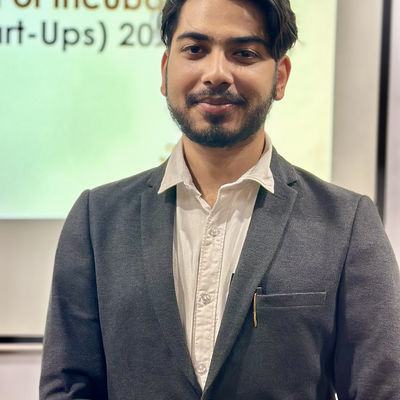
Your AI agent has access to your database, your APIs, and your users' data. But would you give a new hire admin credentials on day one? We do this with AI agents constantly - deploying them with full system access before they've proven they won't hallucinate a DROP TABLE or leak sensitive data to a prompt injection attack. Guide dog training programs solved this problem decades ago. They take untested puppies and transform them into autonomous agents trusted to make life-or-death decisions - through a systematic process of graduated trust. A guide dog doesn't get to navigate traffic until it's mastered basic commands. It doesn't work unsupervised until it's proven reliable across thousands of scenarios. And critically, it's trained in "intelligent disobedience" - knowing when to refuse a direct command because following it would cause harm. In this talk, I'll introduce the Progressive Trust Framework - a practical approach to AI agent deployment inspired by 90+ years of service animal training. You'll learn how to implement graduated permission systems where agents earn expanded access through demonstrated reliability. We'll explore the "3 D's" testing methodology (Distance, Duration, Distraction) for validating agent behaviour before promotion. And we'll tackle the hardest problem: training agents that refuse harmful requests without becoming unhelpfully paranoid. Whether you're building autonomous coding assistants, customer service bots, or internal automation tools, you'll leave with concrete patterns for deploying AI agents that earn trust instead of demanding it. Because the question isn't whether your AI agent will make mistakes - it's whether you've built the guardrails to catch them before they hit production. Talk Outline: 1. The Trust Problem We're Ignoring AI agents deployed with broader permissions than new human hires Real-world incidents: prompt injection and over-compliance causing production damage The fundamental question: What contributes more to safety, training or runtime guidance? 2. What Guide Dogs Can Teach Us About AI Guide dogs earn autonomy through phased capability expansion and systematic proofing The 3 D's (Distance, Duration, Distraction) and Intelligent Disobedience Key insight: Training creates capability; deployment infrastructure directs it 3. PTF-ID-BENCH: Measuring Intelligent Disobedience 280 scenarios across six categories (CLEAR_SAFE -> MULTI_STEP attack chains) The ID-F1 metric: Balancing safety against over-refusal The 3D Proofing Matrix: 27 conditions testing behavioral consistency Demo: Running the benchmark 4. The 200-Token Paradox: Empirical Findings Natural experiment: Identical 5.1B training, ~200 tokens of template guidance removed Results: 73% more critical failures, multi-step detection dropped 32.5 percentage points Why templates function as safety infrastructure Token economics: 1 template token ≈ 18-25 million training tokens in safety impact 5. Implementing Progressive Trust Trust levels gated by demonstrated behavior, not time Trust builds slowly, erodes quickly - demotion, not decommissioning Treating chat templates as first-class, version-controlled infrastructure Category-specific failure patterns and how to address them 6. Training Intelligent Disobedience The calibration challenge: Refusing harm without over-refusing Staged approach: Compliance -> selective refusal -> validation Using PTF-ID-BENCH to validate your agents 7. Key Takeaways and Q&A (4 min) Chat templates are safety infrastructure - review them like code The 3 D's provide systematic agent proofing Defense in depth: Templates and training are complementary Resources for immediate use

In Kubernetes, compromised containers often disappear before investigators can respond, leaving no disk, process state or live system to inspect. This talk explores how attackers exploit ephemeral workloads and why traditional forensic approaches fail in cloud-native environments. Attendees will leave with a blueprint for building forensically ready clusters where even the most ephemeral workloads leave a permanent mark.

Real-time analytics. Data warehousing. Observability. LLM Observability. In this session you'll see ClickHouse power all of them — live. We will start with the basics, demo each use case and crack open the hood to understand the architecture that makes sub-second queries at petabyte scale possible. Whether you're evaluating ClickHouse Open Source or ClickHouse Cloud, you'll leave with a clear picture that ClickHouse is the right tool for you.

Financial institutions face mounting pressure to deliver real-time, personalized insights through AI systems while simultaneously ingesting and processing high-velocity transaction streams. Most existing data architectures cannot meet sub-100ms latency demands while handling over 100,000 events per second, creating a critical gap between AI system requirements and infrastructure capability, a challenge familiar to DataOps and MLOps teams operating at scale. This presentation introduces a production-proven online data store architecture combining a Hybrid Transactional and Analytical Processing (HTAP) database (TiDB), Redis as a low-latency cache, Kafka and Kafka Streams for streaming ingestion and materialized views, and Spark for batch pre-aggregation of metrics. The system achieves p95 read latencies at or below 30ms, p99 latencies at or below 100ms, streaming ingestion throughput exceeding 100,000 events per second, and data freshness under one second for critical events. This architecture was implemented at Chime Financial to power AI bots serving real-time member financial insights. The design employs a read-through cache strategy, event-driven cache invalidation via Kafka Streams, exactly-once semantics for stream processing, and a two-tier ML feature pipeline supporting both real-time model scoring and batch training workflows, an operational pattern central to modern AIOps and MLOps practice. Security and compliance controls including PCI/PII tokenization, encryption in transit and at rest, and immutable audit logging are built into every architectural layer, reflecting the SecOps and DevSecOps priorities operations teams increasingly own. Attendees will gain practical blueprints for building scalable, low-latency data stores for AI applications, including data modeling patterns for TiDB and Redis, cache invalidation strategies, capacity planning across four deployment tiers from small-scale to hyperscale, and integration patterns directly applicable to fraud detection, real-time risk scoring, and personalized customer engagement systems.

Enterprise wide area networks face traffic-optimization pressures, including volatile demand, link degradation, and application-specific QoS requirements, that static routing protocols were never designed to absorb. Traffic engineering built on fixed link metrics in OSPF and BGP, or preconfigured policy in early SD-WANs, adapts slowly and leaves capacity unevenly used. This talk presents a reinforcement learning framework that treats wide-area traffic engineering as a sequential decision problem and drives path selection through a centralized software-defined controller. Network state is assembled from streaming telemetry, flow records, and QoS counters; an agent maps this state to rerouting actions based on a reward that favors throughput while penalizing latency and loss. The controller enforces the selected actions on edge devices, and the agent's authority is limited to a bounded, operator-sanctioned action space rather than arbitrary configuration changes. Decisions go to the controller rather than straight to devices, preserving a supervision and audit point. This addresses two obstacles that have kept reinforcement learning out of production WANs: operator reluctance to cede unrestricted control to an opaque agent, and an unclear integration path with existing infrastructure. The framework was evaluated on an emulated network built in EVE-NG, agent implemented in Python, traffic generated by iPerf, on a dual-data-center topology with fifteen branch nodes under injected congestion. Against a static baseline, the learned policy reduced latency by approximately 25 to 30 percent, lowered packet loss by around 20 percent, and raised throughput by roughly 15 percent, while balancing load across parallel paths. This talk walks through the architecture, the decision process behind it, and these results, arguing that constrained, controller-mediated reinforcement learning is a practical route to adaptive, operator-supervised traffic engineering at enterprise scale.

PostgreSQL is increasingly considered by organizations seeking to reduce database licensing costs, modernize legacy platforms, and gain greater control over their technology strategy. However, adopting an open-source database does not automatically eliminate cost, complexity, or vendor dependency. The real business decision extends beyond choosing PostgreSQL. Organizations must determine how it will be deployed, operated, supported, secured, and governed. While PostgreSQL can reduce dependence on proprietary licensing, infrastructure costs, cloud consumption, migration effort, specialist skills, operational support, and business-continuity requirements must still be considered. Moving to a managed PostgreSQL service may simplify operations, but provider-specific features can introduce a different form of vendor lock-in. This session presents a practical, decision-oriented framework for evaluating PostgreSQL across three strategic dimensions: cost, flexibility, and vendor risk. It compares self-managed, vendor-supported, and cloud-managed operating models and explains how each affects total cost of ownership, operational responsibility, portability, resilience, and long-term control. Attendees will leave with a balanced perspective on where PostgreSQL can create business value, which costs are commonly underestimated, and how organizations can benefit from open source without transferring dependency from one vendor to another.


Charla presentada en español. Cualquier cambio de idioma se anunciará.
¿Cómo encuentran los hackers éticos vulnerabilidades en algunas de las empresas más importantes del mundo? En esta charla descubrirás cómo funciona el ecosistema del Bug Bounty a través de casos reales, vulnerabilidades técnicas y experiencias de primera mano. Analizaremos el panorama actual de la ciberseguridad, compartiremos consejos prácticos para mejorar la seguridad de cualquier organización y desvelaremos algunas curiosidades y sorpresas que muestran por qué la seguridad ofensiva es hoy una pieza clave para anticiparse a los ataques. Se presentarán ejemplos técnicos y prácticos de bugs válidos, su impacto, proceso de mitigación y recompensa asociada, comparando el modelo Bug Bounty Program (BBP) frente al modelo de Vulnerability Disclosure Program (VDP). Además, debatiremos la necesidad y viabilidad de una plataforma nacional de bug bounty, que permita canalizar el talento local como herramienta de defensa activa frente al cibercrimen. La sesión incluirá tips personales, enfoques metodológicos y aprendizajes adquiridos durante mi experiencia como bug hunter, buscando no solo inspirar, sino también equipar a los asistentes con una base sólida para explorar este campo de forma eficiente y profesional.
Política de privacidad · Fotografía, vídeo y derechos de imagen
MÁS ALLÁ DEL ESCENARIO
La meta no es acumular ponencias: buscamos un entorno enfocado en decisiones tecnológicas, intercambio de experiencias reales y contactos entre personas que afrontan retos complementarios.
Las charlas aceptadas conservan su profundidad técnica, título original y tiempo asignado para extraer aprendizajes prácticos.
Los paneles y mesas propuestos analizarán riesgo, coste y responsabilidad. Los participantes se anunciarán cuando acepten esos roles.
Las presentaciones voluntarias y el bloque B2B crean oportunidades de colaboración. No se garantizan reuniones.
Panelistas, moderadores, facilitadores, reuniones, catering y sede siguen en coordinación. No se garantizan presentaciones ejecutivas ni resultados comerciales.
Consultar entradasCONOCE A LOS PONENTES
Las sesiones aceptadas para Dubái ya incluyen títulos originales, horarios, fotografías y perfiles profesionales. Los paneles y las mesas redondas son participaciones adicionales que se anunciarán tras su aceptación.
Senior Product Manager, Tabby
Non-engineers in production: when product managers write database migrations with coding agents
Daria Kasatkina is a Senior Product Manager at Tabby, the Gulf's first fintech unicorn. She leads Tabby's in-house CRM platform, which replaces several third-party tools for back-office teams with one system built for AI automation. Before Tabby she built products at Avito, Tinkoff Bank and Modulbank, including LLM-based tools for customer support at Avito. She runs vibe-coding workshops for non-technical professionals and writes on HackerNoon about AI-first product work and experimentation on small user bases.
Product Marketing for PostgreSQL, MySQL and MongoDB at Percona
Your platform team has no story, and that's why you have no budget
Valeria works closely with community users of PostgreSQL, MySQL and MongoDB, analyzing their adoption patterns and demonstrating the transformative value open source databases bring to businesses. Her understanding of the technical and business aspects of multi-model database capabilities and extensibility helps her articulate its benefits to C-level executives and other key stakeholders.
Founder and CISO - Superuser OÜ, CBIT FZCO
Guardians of the Data Galaxy
Hannah Suarez has worked in the information security industry for nearly a decade spanning roles in the software, entertainment, telecommunications and aviation industries. She brings forward a unique insight as a global cyber security entrepreneur that has worked in several countries, who is also a career-changer from the creative industries. Hannah Suarez has previously spoken on cybersecurity in Germany, including the Berlin Bsides 2023 keynote at https://www.superuser.space/latest-news-blog/bsides-berlin-2023-keynote
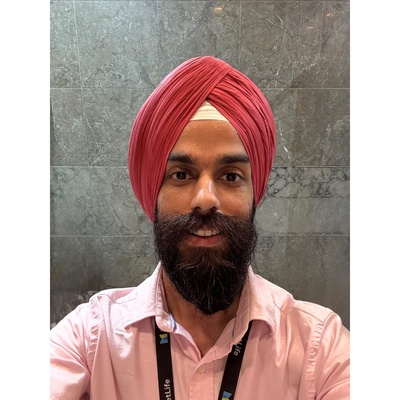
Automation and Observability Lead, MetLife
Detect, Decide, Report: Automating CRA's 24-Hour Vulnerability Response with Elastic and Ansible
Harmeet Singh is the Automation and Observability Lead at MetLife, leading engineering teams building automation and observability platforms across the EMEA region. His work sits at the intersection of infrastructure automation, security observability, and compliance across regulated European environments. Over the past decade, he has worked in platform engineering and large-scale infrastructure automation, focused on systems that reduce manual intervention and improve operational reliability.
CTO at Obmondo · maintainer of KubeAid and LinuxAid
One Binary, Any Cloud: Sovereign Kubernetes with Cluster API and GitOps
Ashish Jaiswal is CTO at Obmondo, a Danish company and member of DOSL (Danish Open Source Suppliers) that runs self-hosted Kubernetes and Linux infrastructure for organisations that need to keep control of their own platforms, and leads a team of 40+ there. Ashish has worked in infrastructure since 2011, spent part of that time at Red Hat, and has been with Obmondo since 2015, rising from engineer to team lead to CTO. Ashish maintains KubeAid, the open-source GitOps application platform for Kubernetes, kubeaid-cli, its single-binary cluster orchestrator, and LinuxAid for Linux configuration management. Ashish brings deep experience in system design and architecture, with a strong focus on engineering mindset: reasoning a design through and catching its errors before anything is deployed. Day to day that means architecture reviews, pulling clusters out of hyperscalers and onto bare metal, and building an AIOps layer so operations need fewer humans at three in the morning. Ashish writes about Kubernetes, Go and self-hosted LLMs at ashish1099.me, is ashish1099 on GitHub, and is a proud father.
CEO of Obmondo.com
One Binary, Any Cloud: Sovereign Kubernetes with Cluster API and GitOps
Head of Obmondo.com - We develop open source to help ensure security and reliability of your Linux and K8s on on-prem or *cloud, enabling cost-savings through a unique customer cost-sharing model, so you can focus on your business.
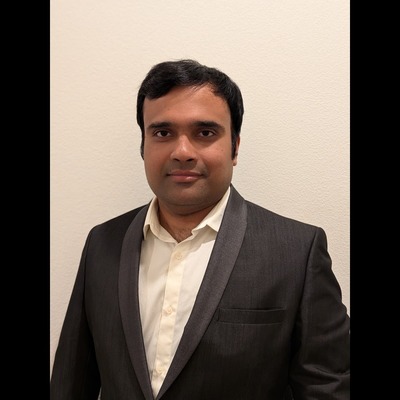
Cisco
Internal Developer Platforms as Force Multipliers for DevOps and SecOps Teams
Rahul Muralinath is a Software Engineering Manager with 14+ years of experience building and scaling high-performing platform engineering organizations. He has a proven track record of growing distributed teams, driving cross-org alignment, and delivering mission-critical platform infrastructure used by hundreds of engineers enterprise-wide, supporting $50M+ in ARR. He currently serves as Software Engineering Manager for Splunk Cloud Platform (Splunk, acquired by Cisco), where he leads and scales a distributed team of 8+ direct reports across US East/West and Canada, including senior and staff-level engineers. He defined the team charter, operating model, and 3-year strategic roadmap for Splunk Cloud's Internal Developer Platform (IDP) and Notifications infrastructure. He influenced and secured leadership buy-in to adopt Backstage as Splunk's golden paved path for platform services, delivering a 10x reduction in engineering effort and impacting 200+ engineers across multiple business units. He owns and operates the core Notifications platform for Splunk Cloud, enabling 5,000+ enterprise customers to configure and deliver 100M+ notifications per week with 99.99% uptime and strict SLA/SLO compliance. He championed org-wide AI adoption under director-level sponsorship, achieving 100% AI integration across the SDLC. He holds 2 US patents: Autoscaling in Stateful Systems (US12020077B1) and Cloud-Based Service for Customer Enterprise (US12461738B1). He holds a Master of Science in Computer Science from the University of Southern California (December 2014).
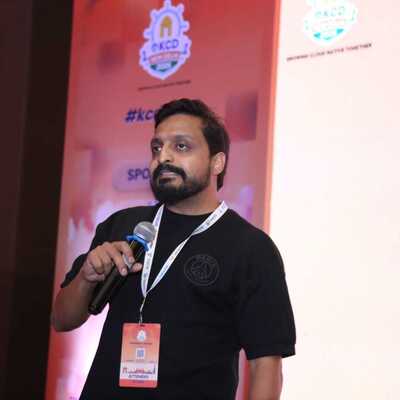
Cloudynamics, DevOps Architect
From ML Chaos to AIOps Maturity: Building Production-Ready AI Systems
Founder at Cloudynamics with hands-on experience in DevOps and SRE. Specialises in building and operating cloud-native systems, agentic AI pipelines, and production-grade reliability engineering. Passionate about sharing real-world lessons from the infrastructure and AI trenches.
Founder at Solanica
The Death of the DBA “Third Pedal”: Automating Databases on Kubernetes
Sergey is a product leader focusing on delivering robust open-source solutions. After having consistently contributed to the growth of Percona and its product open source culture as a VP of Product, he is now leading the Everest open source database platform. Digital nomad, who enjoys spreading the word about data on Kubernetes. He loves playing tennis and hockey, but his major passions are his family, three kids and a dog.
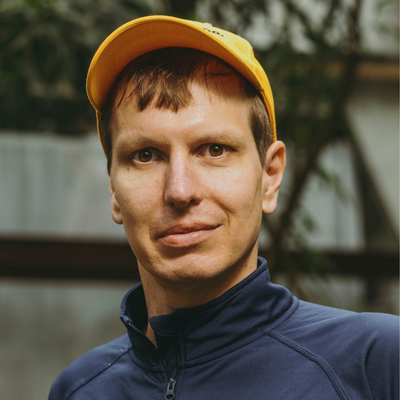
Founder at Percona
17 Database Lessons for DevOps Teams: Bridging the Gap Between Development and Operations
Peter Zaitsev is an entrepreneur and co-founder of Percona, Coroot and other tech companies. As one of the leading experts in Open Source strategy and database optimization, Peter has applied his technical knowledge and entrepreneurial drive to contribute as a board member and advisor to several open source startups. Additionally, Peter is the co-author of the book "High Performance MySQL: Optimization, Backup and Replication," one of the most popular books on MySQL performance.
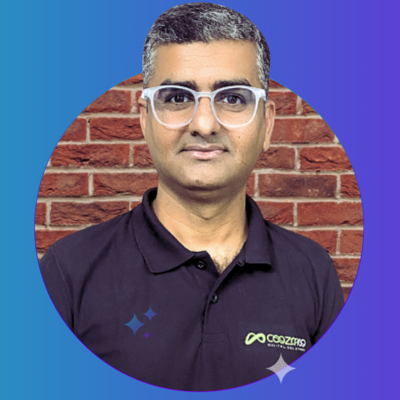
Co-Founder, RankRabbit.ai | Coozmoo - Cloud and AI Engineering
Beyond RAG: Operating Production-Grade AI Agents with Kubernetes, OpenTelemetry and Grafana
Hastimal Jangid is a Cloud, Data, and AI technology leader, enterprise architect, researcher, and technical speaker with 15+ years of experience designing large-scale distributed, data-intensive, and AI-powered systems. He is 10× AWS, 7× GCP, 3×Azure, Kubernetes, Snowflake, Databricks, GenAI, GitHub, and Anthropic MCP Certified, combining deep multi-cloud expertise with emerging AI technologies. His work and research focus on Large Language Models (LLMs), Agentic AI, AI Search and Retrieval, RAG, Model Context Protocol (MCP), cloud-native AI infrastructure, real-time data engineering, AI security, and responsible AI, with particular interest in applications across healthcare and biomedical systems. As Co-founder of RankRabbit AI, Hastimal explores how LLMs and AI agents discover, retrieve, rank, reason over, and recommend information across platforms such as Gemini, ChatGPT, Claude, Perplexity, and Google’s AI-powered search experiences. His research interests include LLM retrieval and grounding, multi-agent systems, AI search, information quality, explainable AI (xAI), knowledge-base poisoning, AI security, and trustworthy AI systems. His engineering background spans AWS, Google Cloud, Microsoft Azure, Kubernetes, distributed systems, Big Data, machine learning, MLOps, real-time streaming architectures, and AI agent infrastructure. He has designed and delivered enterprise technology initiatives across healthcare, financial services, retail, travel, media, and digital commerce. As a technical speaker, Hastimal translates emerging AI research into practical architectures and hands-on demonstrations. His talks explore the intersection of LLMs, AI agents, MCP, cloud infrastructure, K8, search, security, and healthcare AI—explaining how modern AI systems work, where they fail, and how engineers can build them securely, responsibly, and at scale.
Director - Engineering & Products - Coozmoo |Co-Founder - RankRabbit.ai
Beyond RAG: Operating Production-Grade AI Agents with Kubernetes, OpenTelemetry and Grafana
Harsh Jangid is a product and technology leader and the driving force behind RankRabbit.ai at Coozmoo Digital Solutions. He focuses on turning emerging AI technologies into practical solutions that help businesses improve visibility, automate operations, and accelerate growth. With more than 12 years of experience spanning cloud architecture, data engineering, automation, and artificial intelligence, Harsh has helped organizations turn complex technologies into scalable products and business solutions. From building enterprise-grade platforms and modern data ecosystems to developing AI-powered products, his work has consistently focused on delivering measurable business impact. As an AWS-certified architect and product leader, Harsh brings together technical depth, strategic thinking, and a strong focus on business outcomes. He leads the development of AI-powered products that help organizations automate operations, improve customer engagement, and drive sustainable growth in an increasingly AI-driven world.
CNCF KubeStellar Maintainer | Docker Captain | LFX Mentor | 2× GSoC | SRE at Obmondo
Agents Are the New Containers: Packaging AI Agents and Their Guardrails as OCI Kits
Rishi Mondal is a SRE at Obmondo , CNCF KubeStellar Maintainer, and Docker Captain . A Linux Foundation Mentor, GSoC Mentor at CNCF, and OWASP Mentor he uniquely progressed from LFX Mentee to Maintainer to Mentor within a single year. A regular cloud-native speaker at multiple events across Asia . he was personally featured by the CNCF CEO at Kubecon India for community impact . Harvard HPAIR Delegate and LIFT Scholar.
Staff Software Engineer, Walmart Global Tech
Securing Kubernetes at Scale: Resilient Cloud Native Infrastructure Against Cyber Threats
Manpreet Singh Sachdeva is an accomplished DevSecOps, Infrastructure, and AI Specialist with extensive expertise in software engineering practices such as DevSecOps, MLOps, and SRE. He holds a B.Tech in Electronics Engineering and a Post Graduate Diploma in Business Management, with a proven track record in cloud infrastructure security, automation, and AI/ML deployments across a wide range of applications including web, mobile, IoT, and client-server systems. Currently serving as a Technical Duty Officer at Walmart Global Tech, Manpreet is responsible for incident management, service restoration, and ensuring the availability of cloud infrastructure during critical business outages. His previous roles include MLOps Cloud Solution Architect at Domino Data Lab and DevSecOps SRE Lead at Verizon, where he built and maintained scalable machine learning pipelines, optimized cloud resources, and integrated AI models for real-time analytics. Manpreet has been instrumental in projects related to security, compliance, and incident management, with a focus on enhancing operational excellence through automation and cloud-native solutions. He holds several certifications, including AWS DevOps Engineer, Kubernetes Security Specialist, and Prometheus Certified Associate.
Graduate Researcher - Carnegie Mellon University
Teaching AI Agents Like Guide Dogs: A Progressive Trust Framework
Bodhisattva Das is a Graduate Researcher at Carnegie Mellon University and a Security Researcher at RUDRA Cybersecurity, focused on securing non-human identities, AI agents, and automated workloads across cloud environments. He specialises in open-source threat detection using Wazuh and builds practical solutions for identity governance and AI-driven security operations. Driven by a passion for digital rights and responsible AI governance, he strives to build secure systems that protect people as technology evolves. Outside of work, he enjoys traveling and exchanging ideas with global tech communities.
Lead Consultant
Dead Container Walking: Post-Incident Analysis When Your Workload Is Already Gone
Saurabh Mishra is a Cloud Evangelist and technology enthusiast specializing in cloud architecture, DevOps, automation, and Agentic AI. Through active community engagement, he shares practical knowledge on cloud-native solutions, AI-powered workflows, security best practices, and multi-cloud ecosystems. As a seasoned speaker and mentor, Saurabh has presented at conferences, meetups, and workshops, empowering teams to drive innovation, modernize their platforms, and unlock business value through cloud and AI technologies
Senior Technical Trainer / Content Developer
One Database, Every Workload
Victor Isakov has worked as a Data Architect / Data Engineer / Evangelist / Trainer with a variety of Data Platforms for over 30 years. He has authored a number of books on database engines, and spoken a conferences/community events for 20 years. Having worked globally in a variety of sectors and projects, he has plenty of experience and deep technical knowledge that he is passionate about sharing.
Senior Software Engineer, Chime Financials
Designing Low-Latency Online Data Stores for AI-Driven Financial Services
Santhoshkumar Anchoori is a Senior Software Engineer at Chime Financial with over 15 years of expertise in cloud technologies, data transformation, and security automation. He has established a sustained record of original contributions spanning large-scale data platform architecture, real-time AI-driven analytics systems, and cost-optimized machine learning pipelines across the fintech and technology sectors. At Chime Financial, Santhoshkumar architected and leads the Data Transformation Services (DTS) platform, an innovative self-serve internal ETL solution that manages over 1,800 pipelines, including 200 business-critical ones, and serves more than 50 internal teams. The platform processes petabytes of financial data for real-time fraud detection, machine learning feature-store pipelines, transactional processing, and analytics. Through his design of optimized CloudWatch log monitoring, the platform has delivered $500,000 in annual cost savings. He leads a team of six engineers in the continued development and maintenance of DTS and presented its fraud detection capabilities at AWS re: Invent 2023. Before Chime, Santhoshkumar engineered high-impact data systems at leading technology organizations. At Roku's AdTech division, he designed the Privacy-Preserving Data Matching Framework within the Clean Room system, establishing a new class of AI-driven, privacy-compliant data architecture that multiple ad-exchange and measurement partners subsequently adopted. At Morgan Stanley's Fusion Center, he architected the Federated Ingestion Layer and real-time data pipelines capable of processing millions of events daily for the firm's global data operations. Earlier in his career, Santhoshkumar held data engineering roles at PayPal, where he led the development of a Centralized Customer Data Lake and automated data pipelines for marketing insights, and at additional organizations where he built foundational expertise in distributed cloud infrastructure and stream processing systems. His scholarly contributions include research published in the International Journal of Computer Engineering and Technology (IJCET), with an impact factor of 18.59, examining optimized real-time data pipelines for financial fraud detection. He is the recipient of the TITAN Innovation Award at the Platinum level for 2024, an internationally recognized honor for professionals who demonstrate exceptional innovation and measurable business impact in technology.
Texas A&M University, Kingsville
Bounded Autonomy: Reinforcement Learning for Adaptive Traffic Engineering in Enterprise WANs
Chetan Hansrajbhai Padshala is a senior network engineer and Texas A&M University alumnus (M.S., Electrical Engineering) with more than a decade of experience designing, leading, and optimizing enterprise-grade network infrastructure across multi-vendor environments. He has led large-scale network transformation initiatives supporting thousands of geographically distributed sites and multiple data centers across the United States and Canada, with a focus on delivering robust, redundant, and highly available connectivity at scale. Over his career, Chetan has architected and supported multi-vendor infrastructure spanning Cisco, Meraki, Palo Alto, Aruba, Juniper, SonicWall, Check Point, Cradlepoint, and Cumulus Linux platforms across large enterprise and retail network environments. He specializes in traffic engineering, IP strategy, LAN/WAN architecture, and high-availability network design for geographically distributed environments and has driven automation and monitoring initiatives using Python, Ansible, SolarWinds, Infoblox, and NetBrain. Chetan holds a Cisco Certified Network Professional (CCNP) – Enterprise certification, along with CCNA and two Cisco Enterprise Specialist certifications. He earned his Master of Science in Electrical Engineering from Texas A&M University, building on a foundation in electronics and telecommunications engineering.
PostgreSQL Enthusiast (PostgreSQL DBA, Percona)
Open-Source PostgreSQL: Managing Cost, Flexibility, and Vendor Risk
Sonia Valeja has been passionate about data and databases since her university days. She began working with PostgreSQL since the year 2012 at her first company and has taken on various roles, including PostgreSQL DBA, PL/pgSQL Developer, Database Lead, and Migration Lead. She is the co-author of PostgreSQL for JobSeekers, published in June 2023, and has created a LinkedIn Learning course on PostgreSQL’s backup tool, pgBackRest, which was launched in April 2024.
Offensive Security Engineer - Founder Member Hackén Cybersecurity Conference
Game of Bounties
Offensive Security Engineer | Founder Member at @Hackén Cybersecurity Congress | x3 Cybersecurity Master Degree | x8 CVE | MBA | OSCP | CRTO | BSCP | PNPT | eWPT | eCPPTv2 | eJPT | CAP | CSX | CCNA | x8 Hall of Fame
CTO at Grayback | Cybersecurity Evaluator | Offensive Security Researcher
Game of Bounties
I am the Chief Technology Officer (CTO) at Grayback, a bug bounty platform dedicated to helping organizations identify and remediate security vulnerabilities through ethical hacking. I also work as a Cybersecurity Evaluator at Jtsec, where I assess the security of products under internationally recognized certification schemes. With several years of experience in cybersecurity and computer networks, I specialize in penetration testing, vulnerability research, secure system evaluation, and offensive security. I am passionate about improving the security of modern infrastructures and actively contribute to the cybersecurity community through research and technical events.
Medios oficiales
X-Ops Dubái 2026 colabora con medios de referencia mediante acuerdos recíprocos no pagados: nos ayudan a difundir el evento y sus logotipos enlazan a sus sitios oficiales.




Acuerdos de medios recíprocos y no pagados. Los logotipos enlazan al sitio oficial de cada medio.
Continúa explorando X-Ops